
In Conversation with Gaia, Founder of Delikado Studio
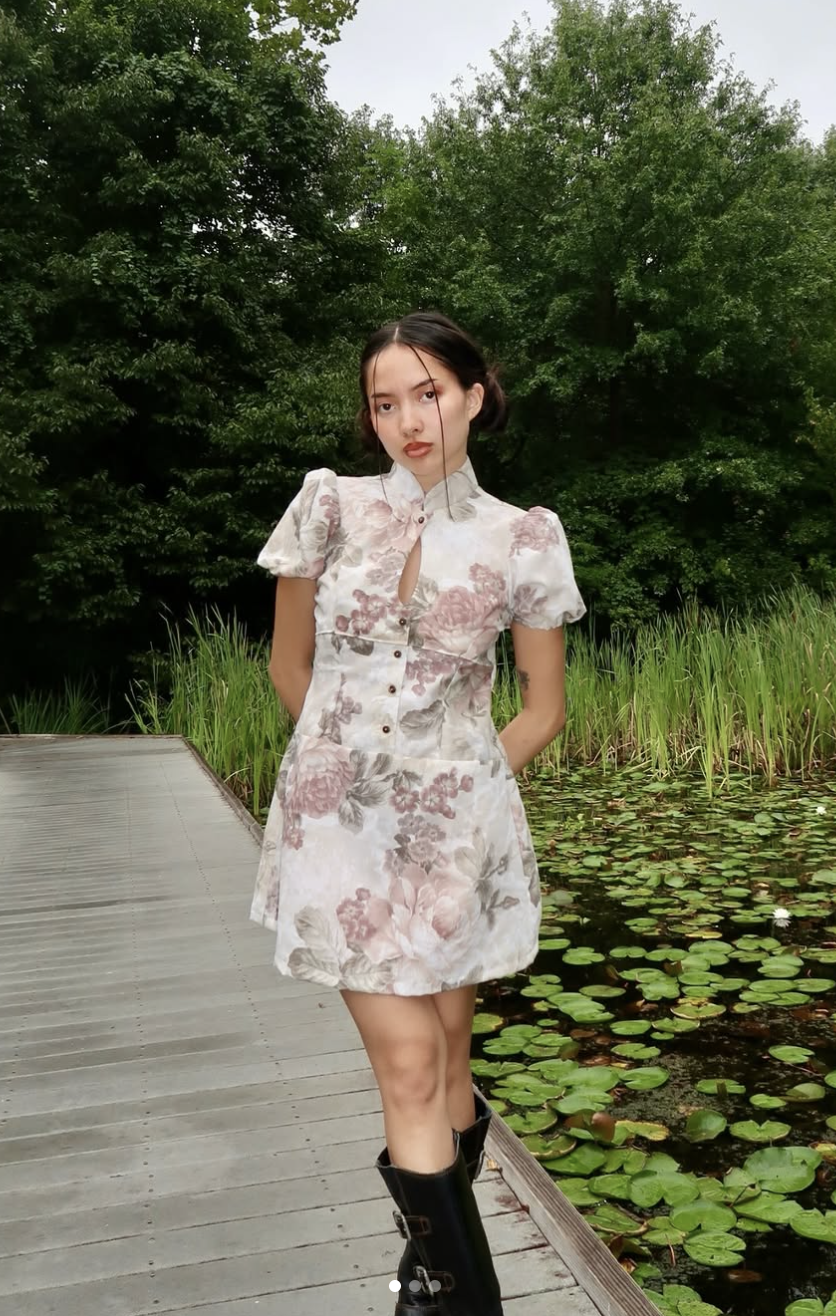
About Gaia
Gaia is a designer whose work is rooted in sustainability, self-expression, and storytelling.
After attending fashion school and witnessing the industry firsthand, she became deeply aware of its environmental and ethical impact. Rather than contributing to this cycle, Gaia chose a different path. Influenced by her heritage, streetwear, and historical eras, she creates expressive pieces from existing materials that challenge traditional fashion norms. Her work is driven by community, creativity, and the belief that clothing can be both intentional and unapologetically powerful.
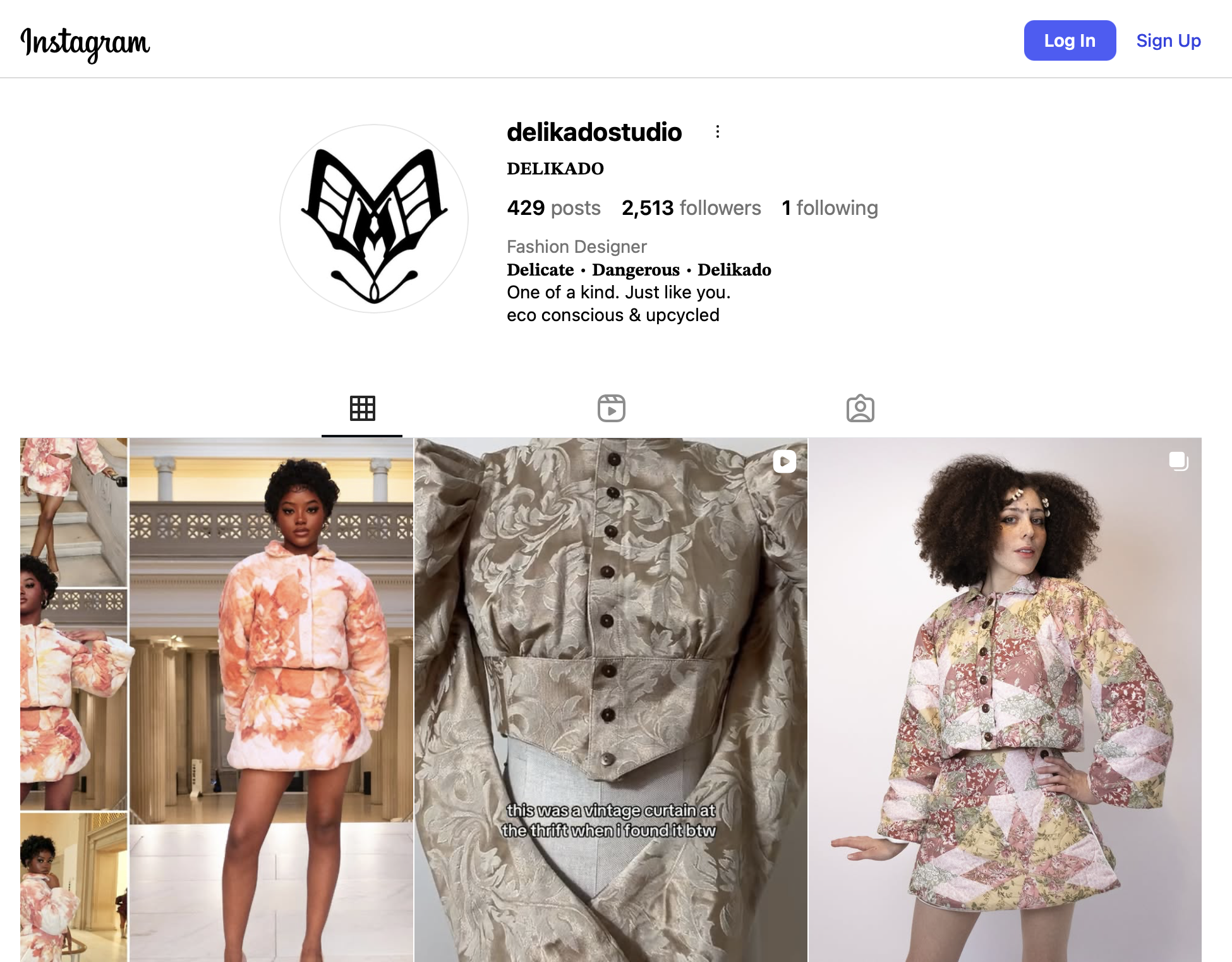
About Delikado Studio
Delikado is a fashion brand that pushes boundaries. Named after the Tagalog word meaning both “delicate” and “dangerous,” the brand reflects a generation that is bold, restless, and unafraid to challenge the fashion industry. Founded in response to fashion’s environmental impact, Delikado rejects fast fashion in favor of remixing existing materials and thoughtful creation.
Question: Can you share what first sparked your interest in upcycling, and how you decided to make it a central focus for your brand?
Answer: I got really into vintage shopping when I was in fashion school because I wanted to find pieces that were unique. My goal was to have something nobody else had—something totally different. This was around 2016, before thrifting was really a thing. People would make fun of me for it all the time, and I’d be like, no, you don’t even understand how many gems are there. There’s actually so much cool stuff.
In fashion school, one of the things they really emphasized was how big an impact fashion has on the environment. At the time, it was the number two polluter in the world, next to oil. I remember thinking, this isn’t even a necessity—no matter how much I love fashion—and we’re destroying the earth for it. That didn’t sit right with me. I’ve always loved nature and being outside. I was the type of kid who wouldn’t even kill a bug if I found one in my house; I’d capture it and put it back outside. So the idea of going down a production route and creating new pieces just didn’t feel like the right way for me.
I started with vintage selling, but people just weren’t buying my pieces. I remember doing the Rose Bowl Market in LA and thinking, let me try something different. I had these pants and decided to distress them. I took a razor to them and painted on them, and that ended up being the first piece that actually sold. I realized people liked it when I remixed things. So I decided to lean into that. I started doing it more, selling on Depop, posting online, and people really loved the videos.
Question: Can you share where you draw inspiration for your designs from and how it translates into your work?
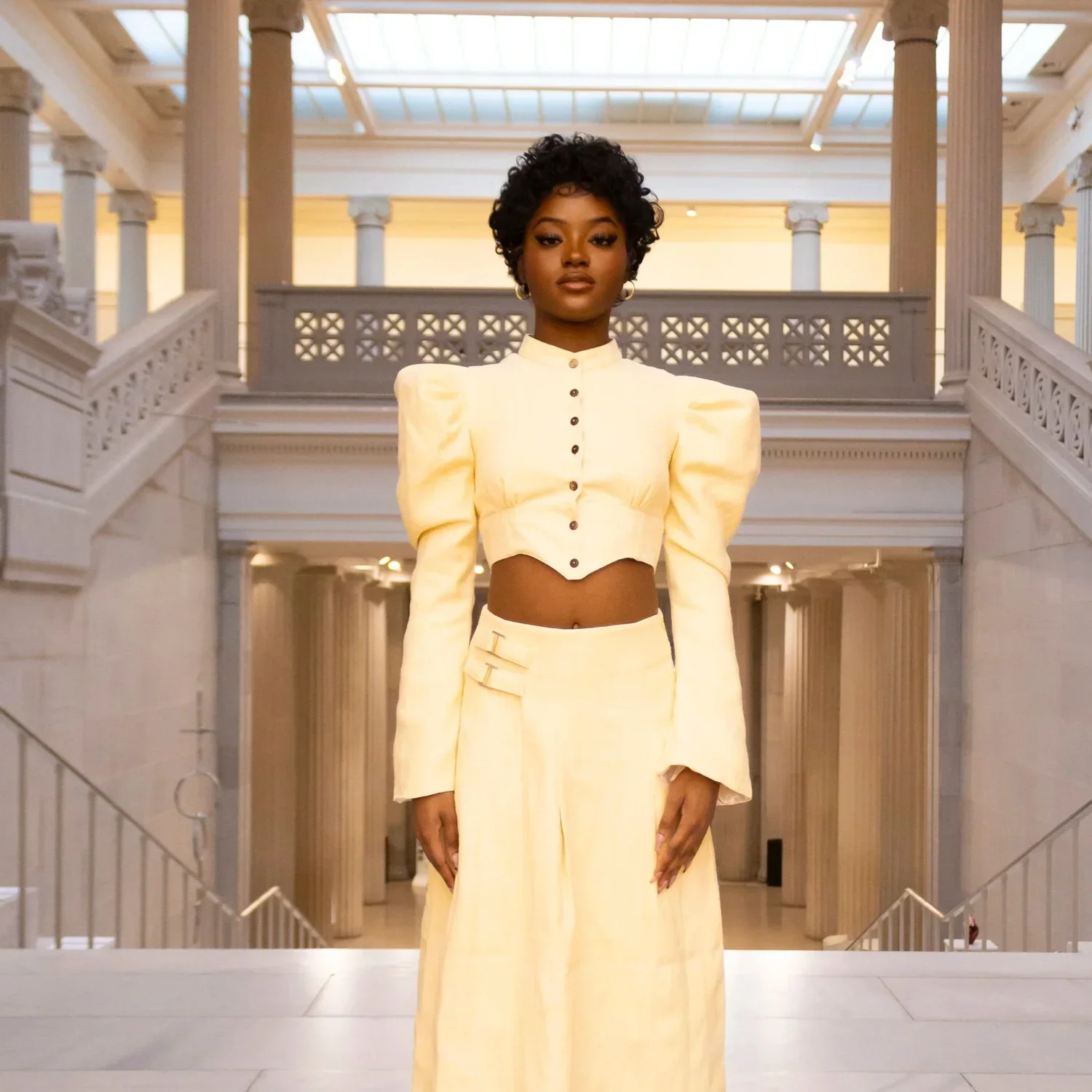
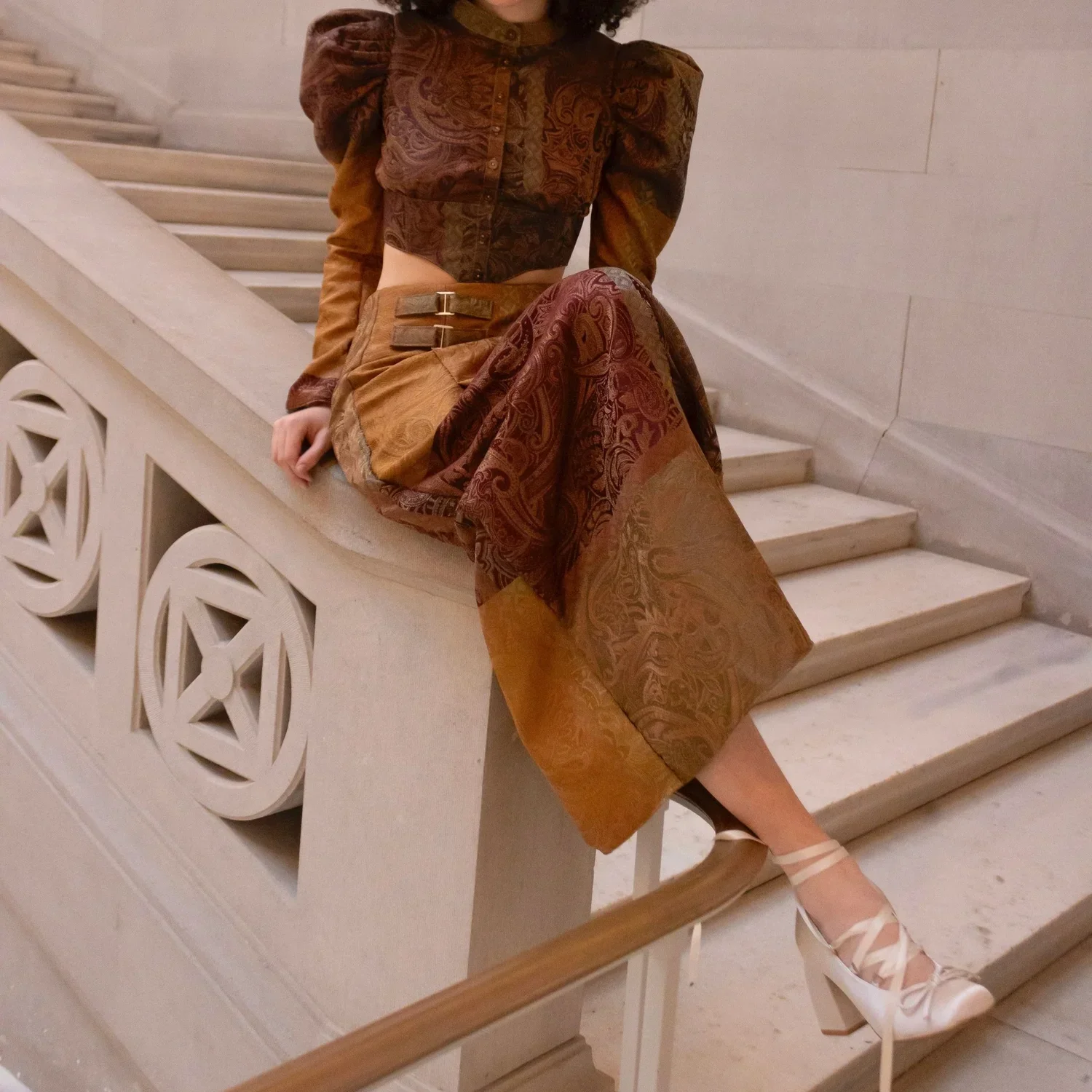
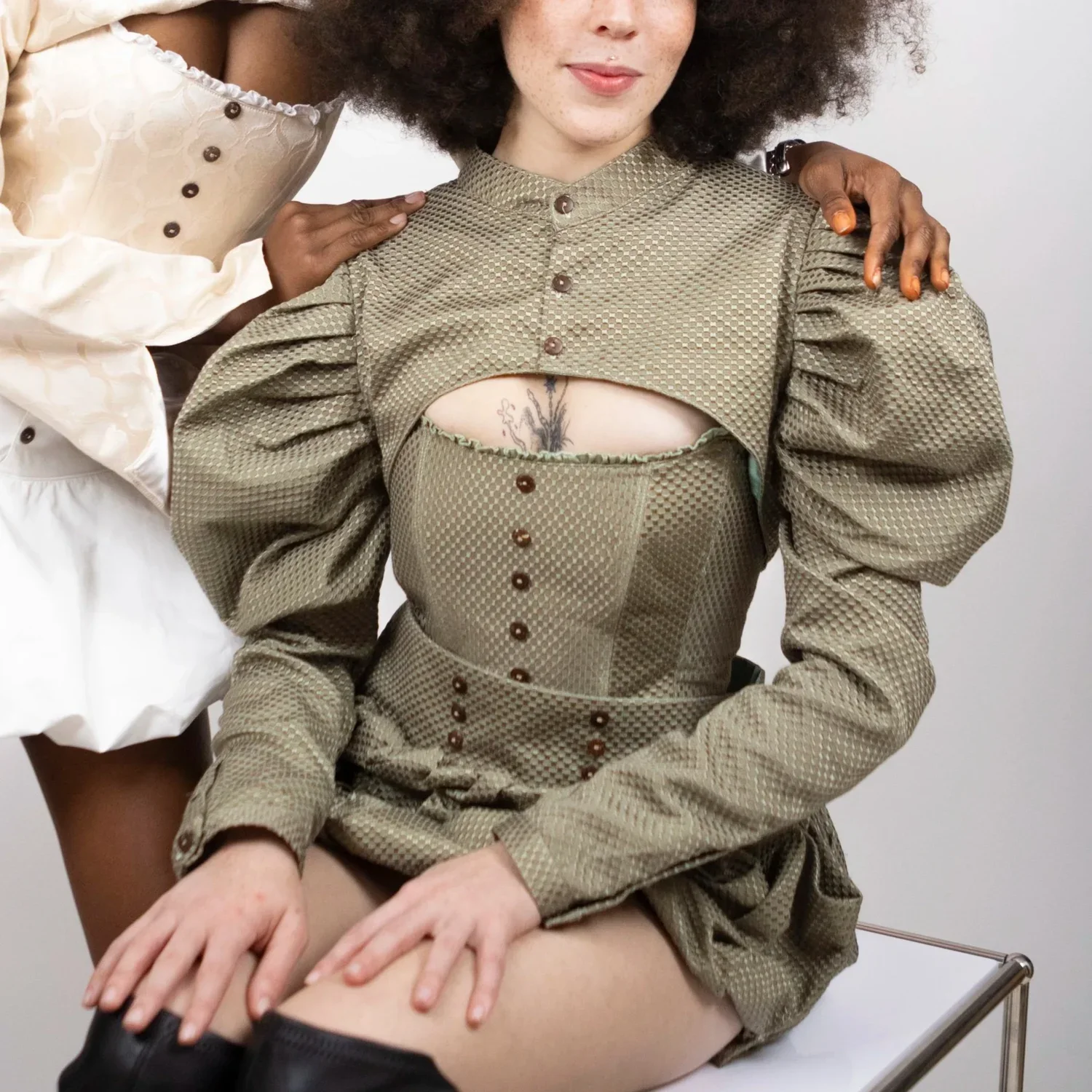
Answer: I am so inspired by the Philippines, where I’m from, especially the color and richness of the atmosphere itself. It’s gorgeous, and the traditional clothing is a huge influence for me. A lot of our clothing isn’t soft or stretchy; it’s made from materials like jacquard and tulle—these really whimsical, magical fabrics that are shiny and shimmery. I actually hand-source all my fabrics. I definitely feel for things that are from different eras. I really love things that feel royal or princess-like.
I also draw inspiration from every era. You’ll see references to the ’20s, ’30s, ’50s, ’60s, and ’80s—I really jump across all of them. My favorite periods are probably medieval and Baroque, but I also love incorporating elements from the ’90s and the ’80s. I like to play around with how many different eras and sources of inspiration I can bring together into one look. I think my pieces really elicit a feeling in people more than anything.
Question: In what ways have your own personal experiences and life influenced your creative vision?
Answer: I have a really interesting background. I was born in the Philippines but grew up in Memphis, Tennessee, so I draw a lot of inspiration from streetwear and what I saw people wearing as I grew up. At the same time, I’m deeply inspired by where I’m from—my roots—and by traveling back and forth.
I grew up in an environment where you couldn’t really go to class looking “busted” because people would make fun of you. It would be, “What are those? What are you wearing?” You had to be on your A-game. I was one of the only Asian students in my school, which at one point was predominantly white, and it wasn’t really considered cool to dress differently. I constantly felt challenged by my style.
There was this shift where it went from, “You can be loud and wear whatever you want,” to going to a prep school where everyone dressed the same, and if you didn’t, people didn’t want to talk to you or hang out with you. I was also going through an identity crisis. I was scared to bring my ethnic food to school because people would comment on how it smelled or question it.
Because of all of that, my style means a lot to me now. I wear whatever I want, and I don’t care what anyone thinks in any room I walk into. I always push myself, especially for events, to ask, how can I wear something that stands out? How can I wear something that might make people uncomfortable, or even offended? At this point, I challenge myself to be uncomfortable and to express myself no matter what.
That’s really my biggest goal with my design process: creating clothing for bold women and expressive people—people who don’t care what others think, and who want to be pushed and challenged.
Question: How has social media impacted your path as a designer and the brand?
Answer: Social media has completely changed my brand’s trajectory. I don’t think I’d still be doing this without it. It’s allowed me to reach people from so many different places and expand beyond belief. Finding community through it has meant everything to me.
Question: If you had to capture the essence of the brand in just three words, what would they be?
Answer: Whimsical, fearless, and intentional.
Question: How do you approach storytelling through your designs?
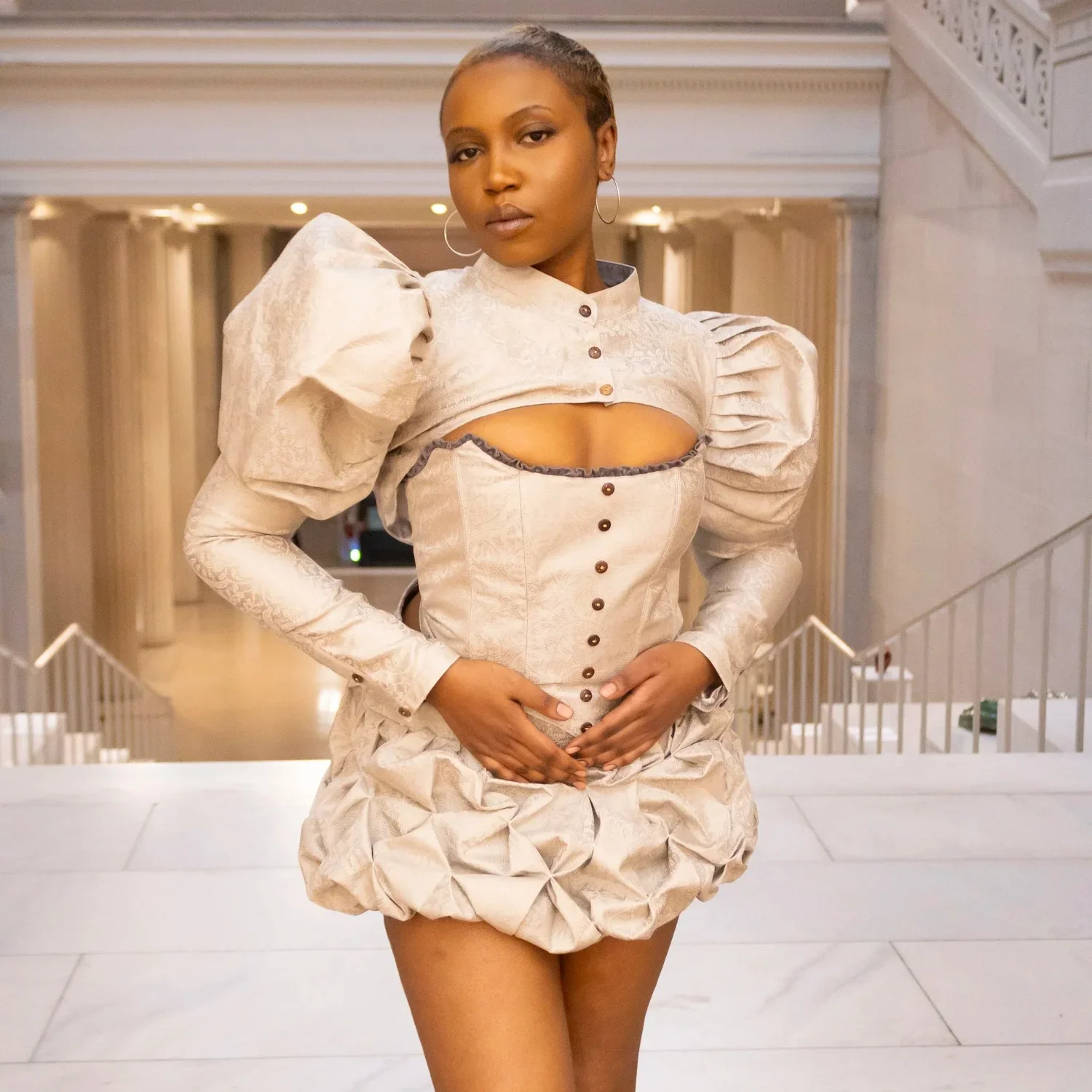
Answer: I think it really comes through in the design itself. I don’t really invest a ton in flashy photoshoots. If you were here right now, we’re just in a studio with me, two models, and my operations manager, taking pictures on my digital camera. I like to let the clothes speak for themselves and be the spotlight.
I hand-source the models and people I work with. They also embody boldness, fearlessness, and whimsical vibes. They tell the story. These aren’t just models from an agency; they’re real people I’ve carefully chosen. I also like to tell stories through video, by getting really personal. I like people to feel very connected.
Question: Do you have a personal favorite piece that you've made?
Answer: The piece I made entirely out of paper is still iconic to me. I’ve had so many ideas involving paper, but I think I’m a little scared because I don’t know if I can top it.
Anything I’ve done using trash, though, I’m really into. I want to explore that more because it’s fun, creative, and it says a lot. It kind of speaks for itself in how environmental impact and fashion are so closely tied together.
Question: What advice would you give to aspiring designers who are just starting to find their voice?
Answer: I’ll look at this as if I were talking to myself when I was just starting out. I would say: just start. It doesn’t matter if it’s not perfect or if the vision isn’t fully complete. It’s about putting yourself out there.
With social media, don’t wait until you have high-budget photoshoots or elaborate videographers. Take your phone out and take a picture of whatever you’re doing. Take a video of whatever you’re working on. It doesn’t matter if your editing or photography skills aren’t good—people are going to focus on what you’re making above all else. The most important thing is to start posting and put yourself out there without holding back.
If there’s one thing I could change about my career, it’s that I wish I had started earlier, when I first knew this was what I wanted to do. I wish I had really locked in and gone all in back then, because time is the most valuable thing to me. Now that I have kids, that feeling is even stronger. I want to really push them to pursue their passions as soon as they figure out what they want and just go for it.
You can find Gaia & Delikado across social platforms at @delikadodesigner and @delikadostudio