I’ll have a Martini
How do you like your martini? The question that has many answers, yet will cause an uproar of arguments on how “their version” of a perfect martini is made. Shaken or stirred? Wet or dry? Gin or vodka? Everyone has their own version or preference, making this overall simple drink quite complex. From all the way to the 19th century to today, the Martini has continued to evolve and grow in popularity in today’s cocktail culture. Whether it be Winston Churchill, Hemingway, Blair Waldorf, or James Bond–the martini remains to represent class, elegance and quality taste. So what really makes a martini and where did this deliciously strong drink come from?
Much like how we martini lovers feel after the fourth martini of the night, figuring out the origin of the martini itself is a bit, well, blurry. One popular theory is that the martini evolved from a cocktail called the Martinez, which is itself considered a Manhattan variation created in 1864. The Martinez was said to either have been created by Jerry Thomas at the Occidental Hotel or by bartender Richelieu in Martinez, California.
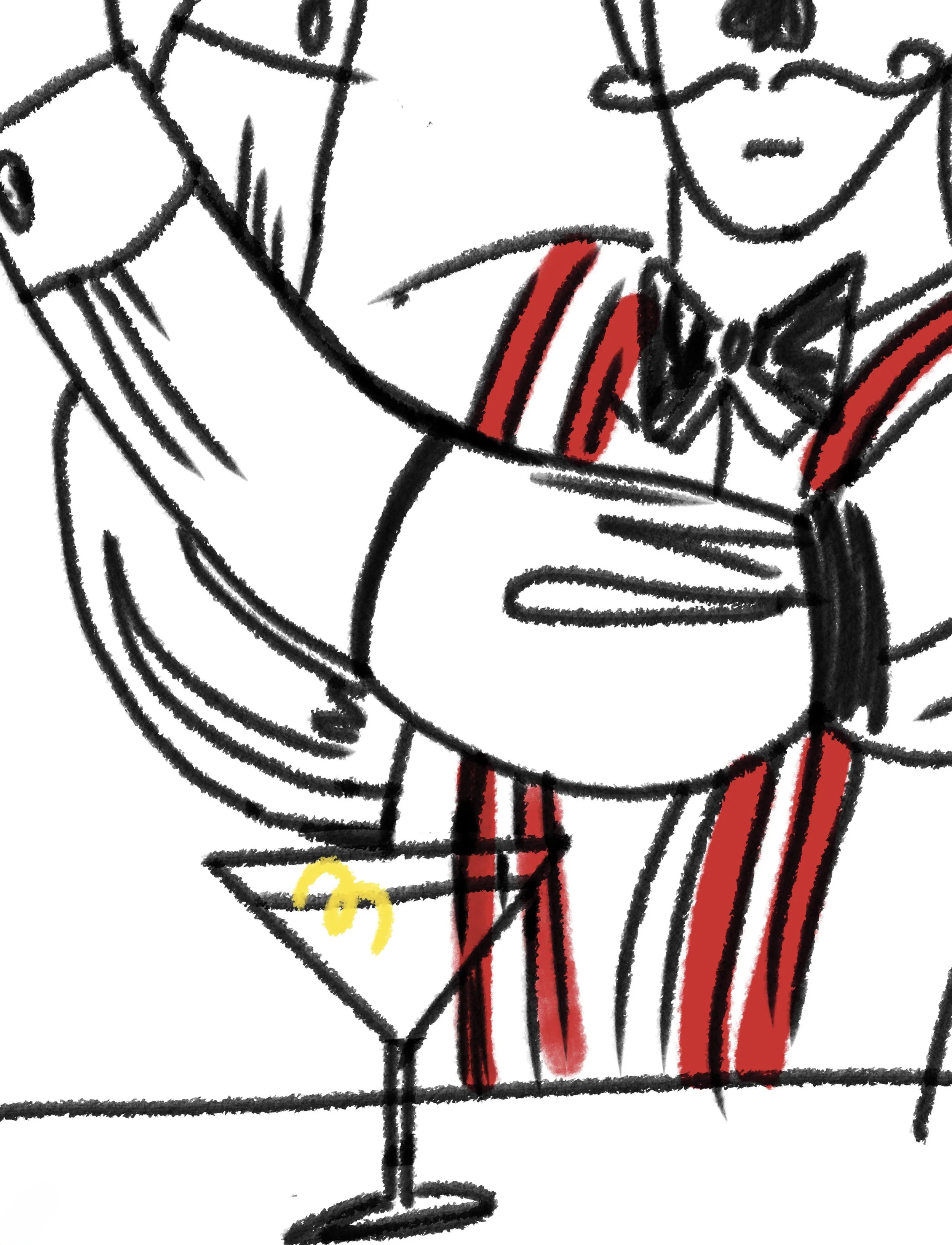
As the martini continued to evolve, we eventually created the “original” martini, made with equal parts vermouth and gin during the Prohibition period. The reason the ratio was equal parts during this time was to actually mask the taste of the bad quality gin. This became especially popular as there was a rise in people who could not afford smuggled liquor leading to — homemade bathtub gin from 1920 to 1933.
Now, let's talk about variations and the results of the evolution of the martini. Starting with the “dry martini.” The term “dry” means the martini is made with either just a rinse or a hint of vermouth. You could even go further and order “extra dry,” which means no vermouth added, which was a very common drink in the 20s. The “Marguerite Cocktail” created in 1904 is seen by many as an early form of the dry martini as its proportions were 2:1 – Plymouth dry gin, dry vermouth, and a dash of orange bitters. As the years went on, by 1922, we see the recognizable rise of bartenders using the ratio of 2:1 London dry gin and vermouth, a dash of orange bitters, stirred in an ice-filled mixing glass, strained into the glass, followed by the drinker’s choice of garnish: a lemon peel twist, an olive, or a cocktail onion.
When garnished with an olive (or 3 if you're like me) we are presented with the dirty martini. Created in 1901 by bartender John O’Connor in New York, the dirty martini wasn’t said to be officially recognized until the 1980s. This variation was salty and savory with either a splash or full ounce of olive brine allowing the drinker to make it as “dirty” as they would like.
As mentioned earlier, back when the original martini was a 1:1 ratio of equal parts of gin and vermouth, also now known as a “wet” martini, another variation of this is called an upside-down martini. This variation is heavier on vermouth, flipping the ratio to be 1:5 of gin and vermouth. To drink a martini with equal parts or heavier on the vermouth ultimately makes the cocktail much easier to drink for those trying to step into the martini world.
I will say the more you experiment with vermouths and gins, the more you can appreciate and enjoy a martini. Maybe you like a fruitier gin or maybe you prefer a more floral one in your martini? Now, if you are new to martinis, you are probably reading this thinking,“Wow, for a martini that essentially has 2-3 ingredients, why is it so complicated to order?” Well, once you figure out if you like your dry, wet or dirty, now you can decide if you want yours made with vodka or gin. I always tell people if you do not like martinis, you just haven't found the one for you yet! And please do not say you are a martini drinker if you are only ordering lychee or espresso martinis… Great drinks! But it is nowhere in the same category.
Moving on to vodka martini variations, the most popular one to this day is from the iconic James Bond scene in Casino Royale, where he orders his famously “shaken, not stirred” Vesper Martini. This iconic phrase and martini variation in 1964 was when people began to acknowledge the choice of vodka in a martini. Many will argue which is better and some even say “vodka with a dirty martini and gin with a classic one,” but I stand by the fact that the only way to have a martini is with gin.
Yet another question for you martini drinkers… shaken or stirred? This really depends on the drinker’s preference, as many will say they do not taste or know the difference, therefore they do not have a preference. But when stirring your martini, there is less dilution, which means it keeps more of the integrity of the gin, creating a velvety and silky texture. On the other hand, the shaken martini incorporates melted ice and aerates the gin, diluting the martini, making it easier for some people to drink.
Now enough with the history lesson! Let me tell you about what many know as the “naked” martini which was how I not only had my first martini served to me at Dukes Hotel Bar in London years ago. The iconic bar explained how the key to their iconic “naked” martini is keeping your gin and martini glass in your freezer so that everything is as cold as possible when building it. Then depending on how much vermouth you like, or if you want it dirty or not, for me it depends how rough my week was. You pour your desired amount of olive brine or vermouth straight into your chilled martini glass, adding your frozen gin, garnished with either a thick lemon peel that you expressed around your glass, or 3 olives. When made this way there is no dilution unlike when you shake or stir with ice. But when you freeze your glass and gin it allows the martini to be extremely cold (which is the ONLY and BEST way a martini should be served).
Now that I have caught you up a bit on the history of the cocktail itself let me talk to you about this iconic V-shaped glass. Its long thin stem was designed in 1925, inspired by the champagne coupe. The martini glass was formally introduced to society at the Paris Exhibition back in 1925 as an alternative to the classic champagne coupe glass, the long stem allowing the glass to be held but keeping the drink cool and not warmed by the hand of the drinker. The wide rim allowed the drinker’s nose to be close to the liquid when sipping, so the aromatics can be easily appreciated, as gin tends to have floral or citrus peel aromatics shine through in a martini.
All these different variations have been created and are constantly evolving in the cocktail world today as we cater to different palates. That's one thing I love about the martini, is how customizable it is–from gin or vodka, to the amounts of vermouth, to the garnishes. As we customize, we evolve, and create a new variation such as the addition of a cocktail onion which turns the martini into a Gibson. This variation was said to be created by illustrator, Charles Gibson, in the early 20th century when he challenged a bartender to do something better and new with the martini. Accepting the challenge the bartender decided to just replace the olive with a pickled onion and now you have the Gibson.
In the end, the martini is more than a cocktail, it’s a staple, a ritual, a statement. From its blurry origins to the prohibition era adaptations, the martini has earned its spot as an icon in today’s culture. It's elegant, timeless and adaptable to the palate. Filthy, dirty, savory, wet, or dry, this is your sign to experiment with your martini order that doesn't include espresso or lychee. Cheers!