At TINS, founder Phillip Dizard is bringing New York and Shanghai together, one shengjianbao (crispy pork soup dumpling) and thoughtfully crafted cocktail at a time. But behind the drinks, the food, and the three-story space is something far more personal: a love story.
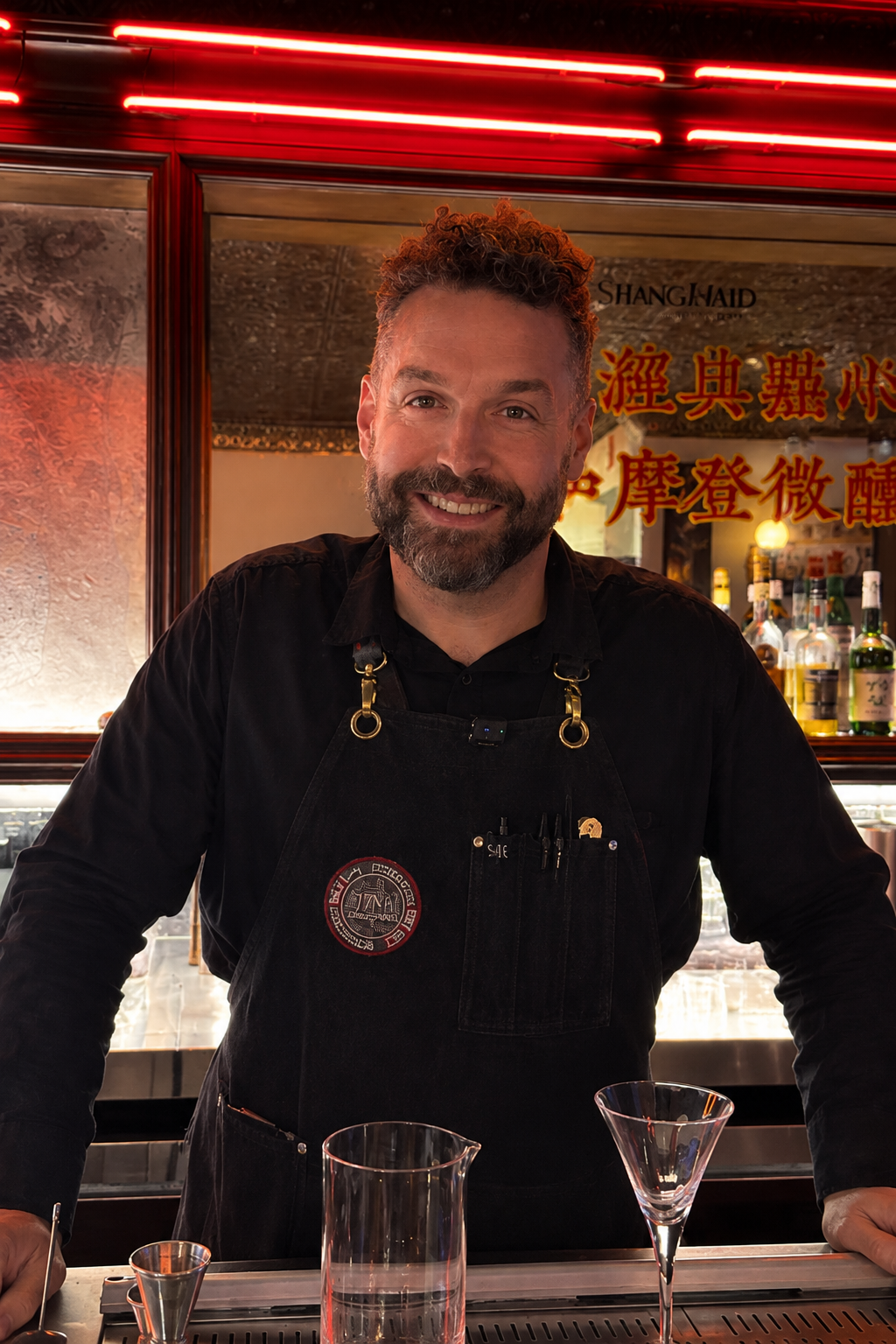
Some people write love letters. Others buy flowers. Phillip opened a cocktail bar and learned to make Shanghai’s beloved pan-fried soup dumplings, all because his wife, Mercury, was missing a taste of home.
Romantic? Absolutely. A little ambitious? Maybe more than a little.
But when you meet the founder of TINS, it becomes clear that doing anything halfway was never really an option.
Born in Manhattan’s East Village and raised on the Upper East Side, Phillip is, first and foremost, a New Yorker. And not just in the geographical sense. He belongs to a particular breed of New Yorker who considers restaurants, bars, and the people behind them essential to the city’s identity.
As a child, while other kids waited for sporting goods catalogs, Phillip eagerly anticipated the arrival of the annual Zagat guide. He would flip through its pages, studying the rankings of New York institutions like Balthazar, Gramercy Tavern, and Union Square Cafe, dreaming about where he might convince his parents to take him for his next birthday.
Hospitality was his version of professional sports.
“I hold that very closely to my identity,” he tells NABI of being a New Yorker. “I’m very passionate about the city.”
Now, roughly twenty years into his hospitality career, Phillip has finally opened a place of his own. But rather than build a bar solely around his experience in the industry, he created something that tells a story about the two cities, and the two people, who matter most to him.
New York. Shanghai. Mercury. Their daughter. And a whole lot of dumplings.
First came Love, Then Came Shengjianbao
When Phillip was falling in love with his now-wife, Mercury, he asked her a seemingly simple question: What did she miss most about home? Mercury, who is from Shanghai, didn’t hesitate.“Shengjianbao.”
Not her belongings. Not her dog. Dumplings.
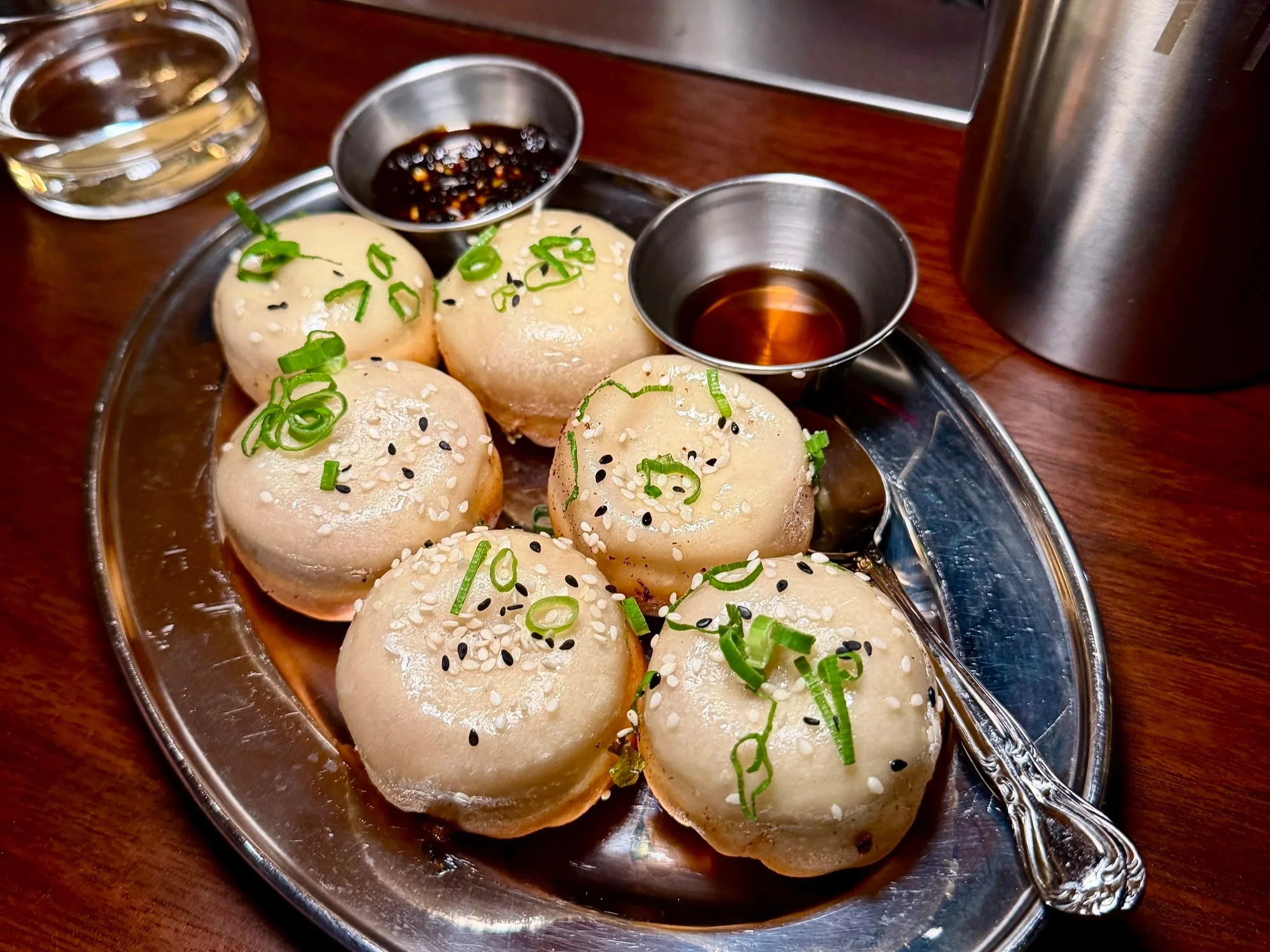
And not just any dumplings. Shengjianbao are Shanghai’s iconic pan-fried buns, known for their crisp, golden bottoms, soft dough, savory filling, and hot broth.
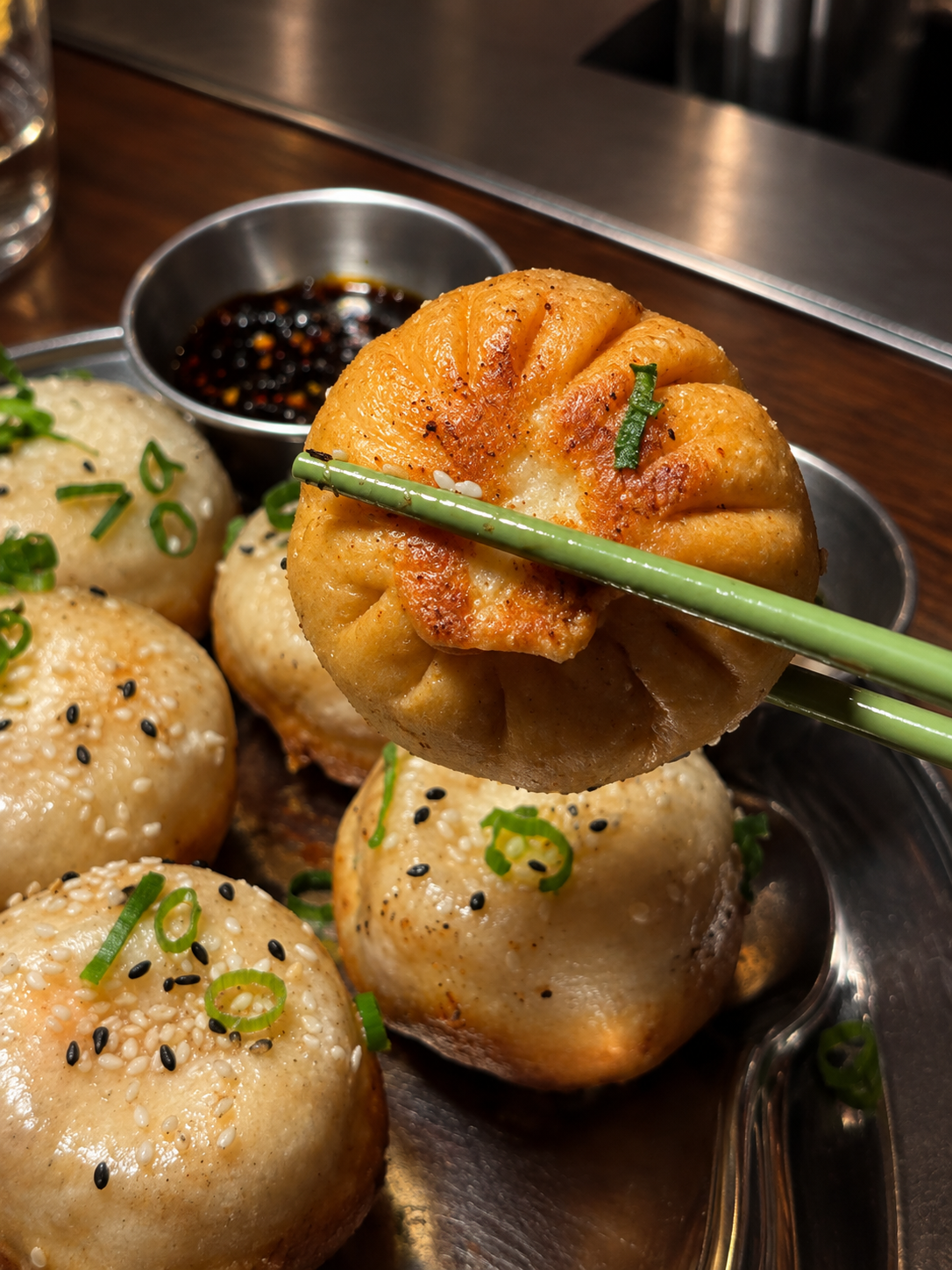
Mercury loved them so much that when returning to Shanghai, she would arrange for someone to bring dumplings to the airport so she could eat them on the ride home.
“My type of woman,” I tell Phillip.
“Priorities,” he laughs.
For anyone unfamiliar with the cultural significance of shengjianbao, Phillip offers a particularly New York comparison.
“Shengjianbao is to Shanghai like slice pizza is to New York.”
Everyone has their favorite. Everyone has an opinion. And everyone is convinced theirs is the best.
Much like the eternal debate between New York pizza institutions, the differences between shengjianbao shops can come down to the dough, fermentation, filling, and technique.
For Phillip, the challenge wasn’t simply recreating a dish. It was understanding what made it so meaningful. And so, rather than develop a recipe from afar, he went straight to the source.
Phillip, Mercury, and members of the TINS team traveled to Shanghai, where they spent months learning to make the dumplings in a local shop. Their chef, Justin, joined the apprenticeship, learning techniques from cooks and the education was hands-on, demanding, and exciting.
Phillip recalls spending long days bent over counters designed for cooks considerably shorter than himself, often leaving with an aching back and oil in his hair from brushing against the kitchen’s low ceiling. But most importantly he remembers the generosity of the people who taught them. The experience was more than culinary research.
It was a commitment to bringing something genuinely meaningful from Mercury’s childhood into their life together in New York.
“We’re laser committed to doing it the right way,” Phillip explains.
Today, the dumplings at TINS represent that dedication, down to the specialized cooking pans Phillip brought back from Shanghai.
And the restaurant’s name? It’s a love story in three parts.
TINS references Mercury’s surname, Tin. It also nods to the metal tins used to shake cocktails. And finally, it stands for Things I Need.
Considering the circumstances, the name couldn’t be more fitting. A Cocktail Bar That Doesn’t Take Itself Too Seriously. New York has no shortage of cocktail bars.
There are the serious ones. The experimental ones. The ones with elaborate explanations for every ingredient and drinks that sometimes seem to require a chemistry degree to understand.
Phillip appreciates technical expertise. In fact, he’s spent much of his career pursuing it. But he also believes the best cocktail experiences shouldn’t make guests feel as though they’re sitting for an exam.
“I take my work extraordinarily seriously. But I really try not to take myself too seriously.” At TINS, that distinction is everywhere.
The space offers different experiences across its floors, with an upstairs bar built around approachable, playful drinks and quick service, and a downstairs cocktail program focused on sophisticated reinterpretations of familiar classics.
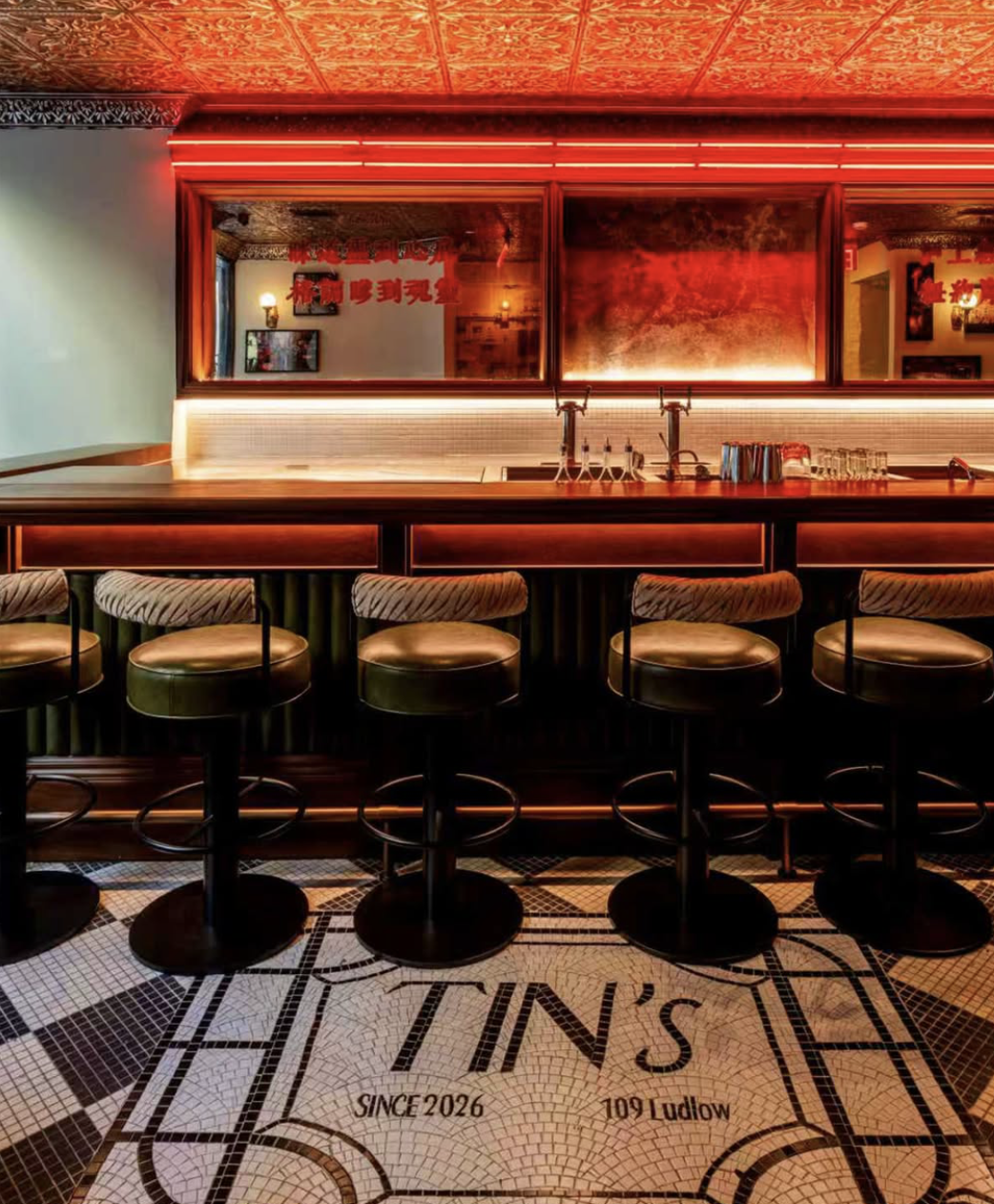
Upstairs, you might find yourself drinking something frozen, tropical, and unapologetically blue.
Downstairs, you might be sipping a carefully constructed Vesper while discussing the subtleties of osmanthus-infused vodka. Both experiences are equally intentional.
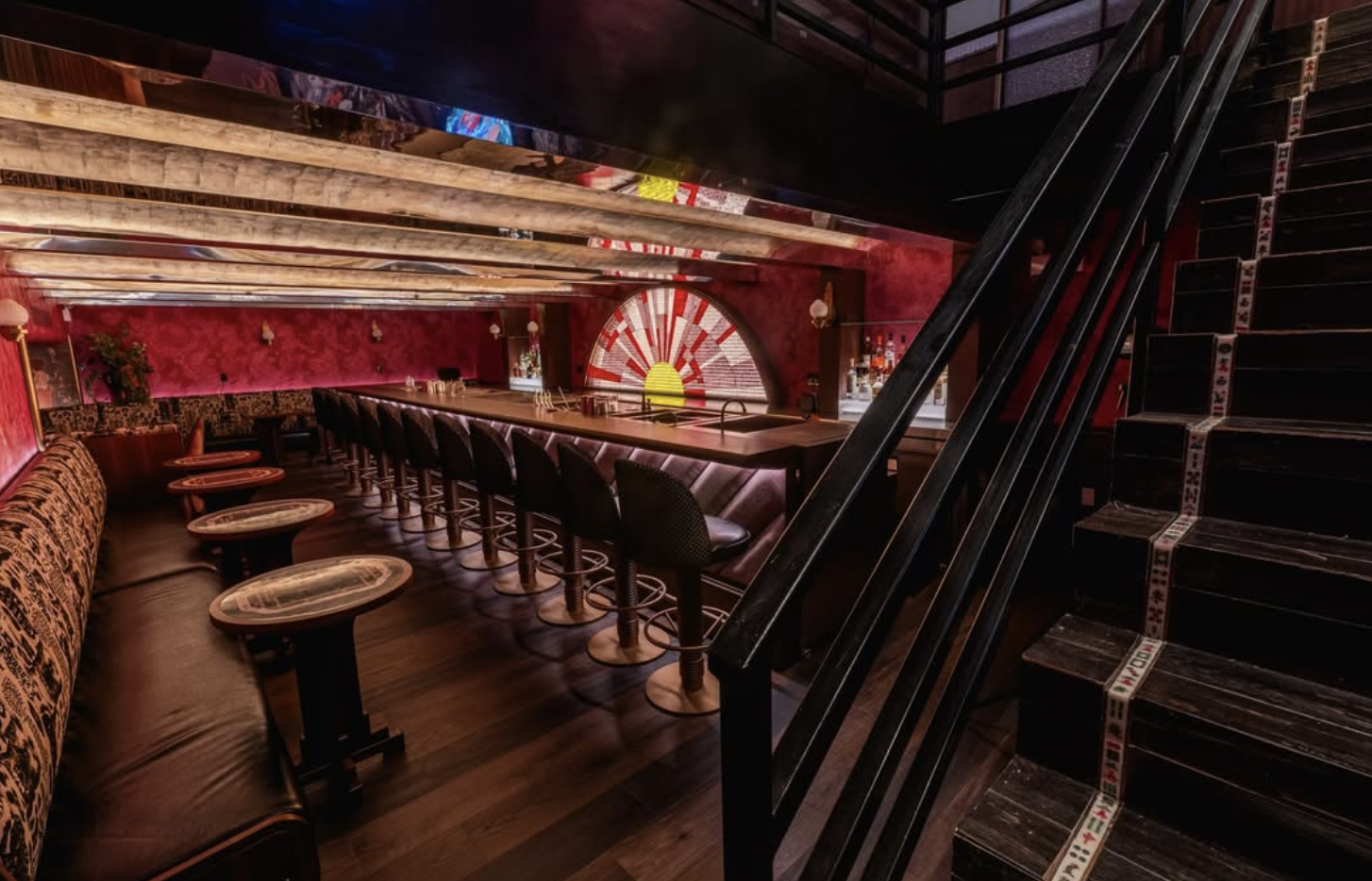
Phillip is particularly fond of challenging the idea that “no drink is beneath any bartender.”
Kegged cocktails? Absolutely.
Frozen drinks? Why not?
Blue Curaçao? Apparently, much to the amusement of his bar director, Bowen, yes. Phillip jokes that he occasionally reminds Bowen that he’s responsible for forever associating the talented bartender with Blue Curaçao. But underneath the teasing is a philosophy that feels surprisingly liberating.
“We’re not above anything.”
The goal isn’t to prove how complicated a cocktail can be. It’s to make something delicious, memorable, and enjoyable. And if that means a bright blue frozen cocktail becomes one of the bar’s signatures, so be it.
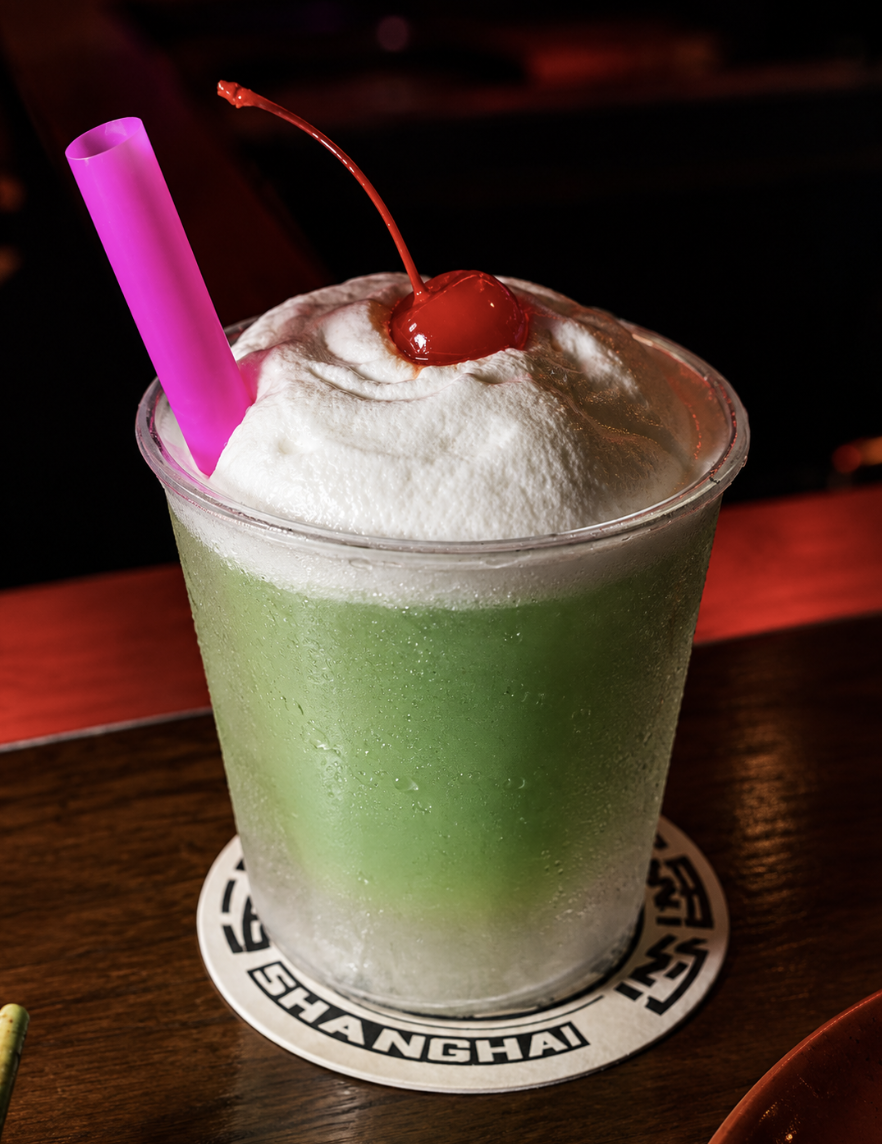
As someone who has enthusiastically recommended Timmy’s Brain Blaster to more than a few friends, I can confirm that fun is very much part of the appeal.
Every Cocktail Has a Story. Literally.
At TINS, cocktails don’t begin with a random collection of interesting ingredients. They begin with memories.
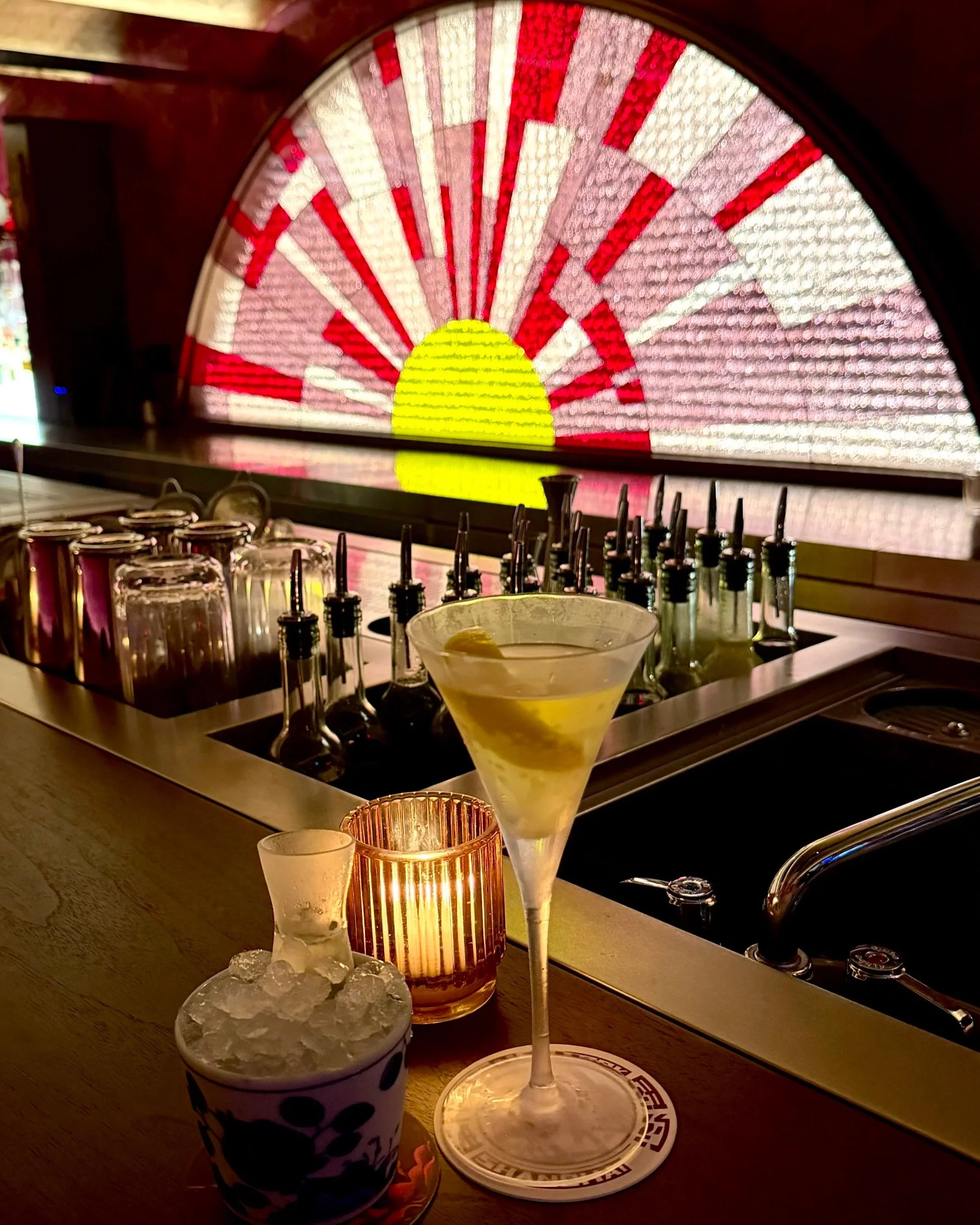
Take the Ozymantheus, Phillip’s interpretation of the classic Vesper.
The inspiration came during a trip to Shanghai with Mercury, when the couple spent their days visiting shengjianbao shops and their evenings walking through the city’s former French Concession.
It was October, when osmanthus trees were in bloom. The streets carried a delicate, honeyed fragrance, and Phillip found himself drinking Vespers in the city’s cocktail bars.
Those two experiences eventually became one drink.
TINS’ version incorporates osmanthus-infused vodka, transforming an ingredient Phillip considers somewhat underutilized in a traditional Vesper into an essential part of the cocktail’s character.
It’s technical, certainly. But you don’t need to understand the chemistry to enjoy it. As Phillip explains, the work should happen behind the bar. “It’s on us to do the hard things.”
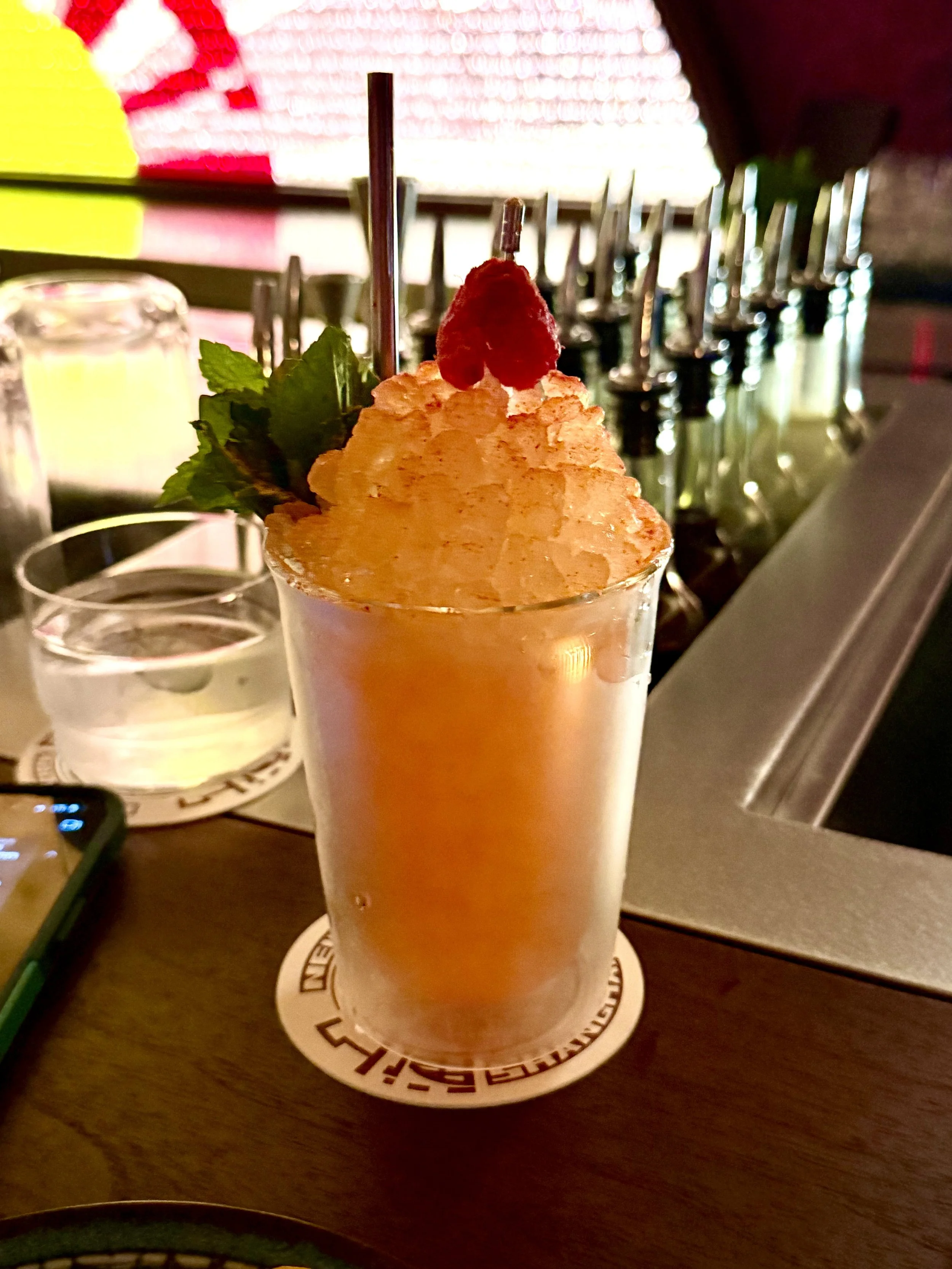
Then there’s the Shaoxing Sherry Cobbler, another cocktail rooted in a very specific memory.
While dining with his mother-in-law in Shanghai, Phillip was served an eighteen-year-old Shaoxing rice wine. Its complex, oxidative character reminded him of sherry, but its flavor was initially challenging. Noticing his reaction, his mother-in-law requested fresh ginger and preserved plums. She added the ginger to the wine, followed by the plum, whose salt helped bring the flavors into harmony.
For Phillip, the experience was revelatory.
Back in New York, he and Bowen translated that memory into a Sherry Cobbler incorporating aged Shaoxing wine, ginger, salted plum, and raspberry. What makes it especially compelling is that the ingredients weren’t selected merely because they sounded interesting together.
They were chosen because they belonged to a real moment.
“The drink can only taste one way because that’s the way it happened,” Phillip says.
And perhaps nowhere is that approach more romantic than in the Aloha Highlands.
A First Date, a Penicillin, and the Woman Who Changed Everything.
Before there was TINS, there was a Hinge match. Phillip had been trying to arrange a date with Mercury for weeks. When she finally agreed, he thought he had devised an impressive plan: seats at the bar at Momofuku Ko, secured through a bartender friend.
What he didn’t know was that Mercury had nearly canceled.
From her perspective, a man suggesting an Asian restaurant for their first date wasn’t exactly an inspired choice. Fortunately, a friend convinced her to give him a chance.
Phillip was already seated with a Penicillin cocktail when she arrived. Mercury took one look at him, glanced at his drink, and immediately identified it.
“Is that a Penicillin? I’ll have one too.”
For a career hospitality professional, it was a rather promising introduction. Phillip doesn’t pretend he instantly knew she was the person he would marry. But he remembers recognizing that something was different.
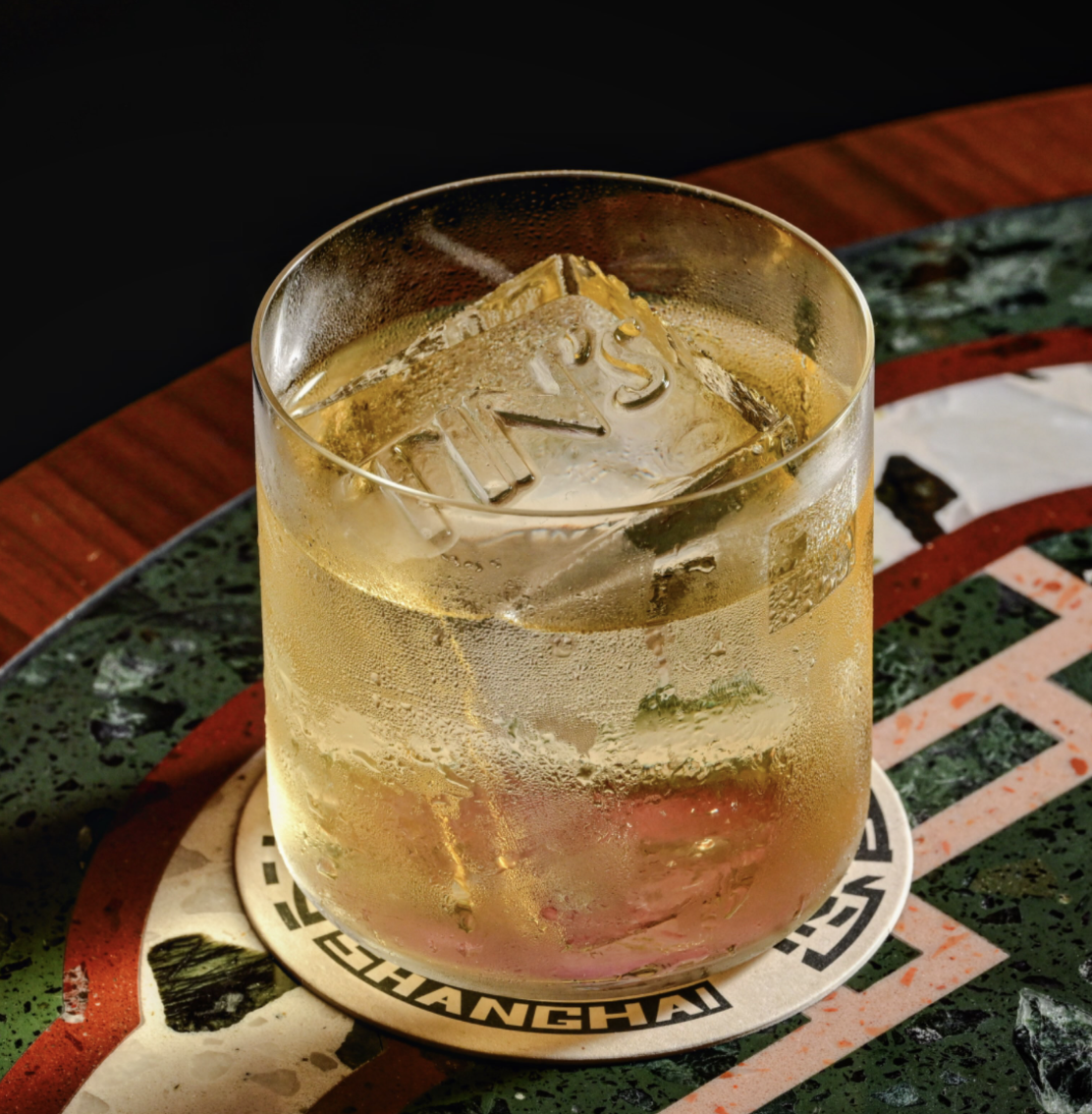
That first shared cocktail eventually inspired the Aloha Highlands, TINS’ reinterpretation of the Penicillin.
Traditionally built around Scotch, honey, ginger, and lemon, the drink is reimagined with tropical elements, including pineapple, coconut milk clarification, and jasmine-infused peated whisky. The concept explores how seemingly opposite things can reveal unexpected similarities.
Scotland and Hawaii. New York and Shanghai. Phillip and Mercury. Two people from different backgrounds, finding common ground. In many ways, the cocktail is a tribute to how Mercury changed his life.
“She’s the remedy for me, I think,” Phillip says.
It’s a line that could easily sound overly sentimental coming from someone else. But after hearing the stories behind TINS, it’s difficult not to find it charming.
The Best Hospitality Isn’t About Going Viral.
For all the elaborate cocktail development, technical precision, and international inspiration, Phillip is remarkably clear about what matters most.
It’s not the rankings. It’s not becoming the next destination on the global cocktail circuit. And it’s certainly not creating a space that looks good in photographs but fails to deliver once the camera is put away.
It’s the people who return.
“Ultimately, it’s the return guest,” he says. That commitment is reflected in the staff, the atmosphere, and the way guests are encouraged to explore the menu. Phillip wants TINS to be a place where someone can arrive with a group of friends or walk in alone, sit at the bar, and gradually become a familiar face. The kind of establishment where the bartenders know your preferences, remember your last conversation, and make you feel like you belong.
His philosophy is rooted in the belief that hospitality requires both extraordinary attention to detail and genuine human connection. And that, more than any single drink, is what creates loyalty.
“All the beverages and the dishes and our style and our design are tools to affect our single goal, which is to affect joy.”
It’s a deceptively simple mission. But simplicity, as Phillip repeatedly reminds me, is often the hardest thing to execute well.
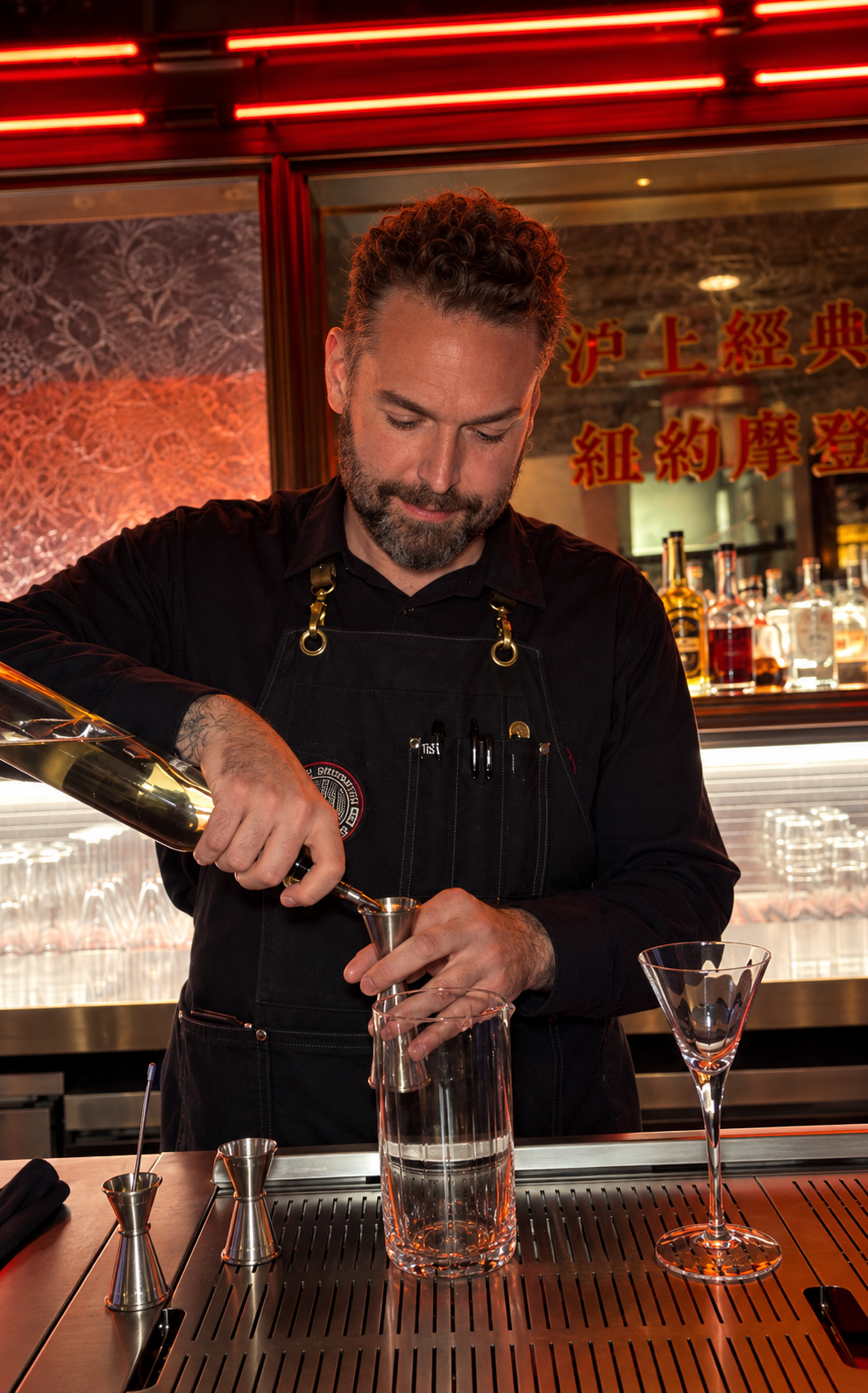
The Case for Never Being Finished.
Ask Phillip which drink was the most difficult to perfect, and he’ll tell you about the Bunny Blanco. Inspired by a Calpico highball, the drink has followed him through various iterations over more than a decade. At TINS, it incorporates citrus, creamy lactic notes, and winter melon syrup intended to evoke the flavor of a graham cracker crust.
Phillip compares the pursuit of its ideal form to chasing a white rabbit. Every time he thinks he’s close, another adjustment presents itself.
Bowen has continued refining the drink, and Phillip seems perfectly content with the possibility that the process may never truly end.
“We don’t really accept any ideas ever being complete.”
That attitude extends beyond cocktails. Phillip is fascinated by the experimentation happening in China’s contemporary bar scene, where he sees bartenders taking creative risks that might be difficult to sustain in New York’s demanding hospitality market.
In Shanghai, he has encountered bars built around highly specific concepts, including one centered entirely on fermentation.
He admires the audacity.
New York, he argues, operates under a different set of pressures. Here, a bar must balance originality with consistency, efficiency, quality, and the ability to keep guests returning.
The standards are relentless.
But for Phillip, that’s part of the attraction. He doesn’t want an easy challenge. He wants the opportunity to keep getting better.
So, What Should You Order?
Naturally, I couldn’t leave without asking Phillip to design the perfect first visit.
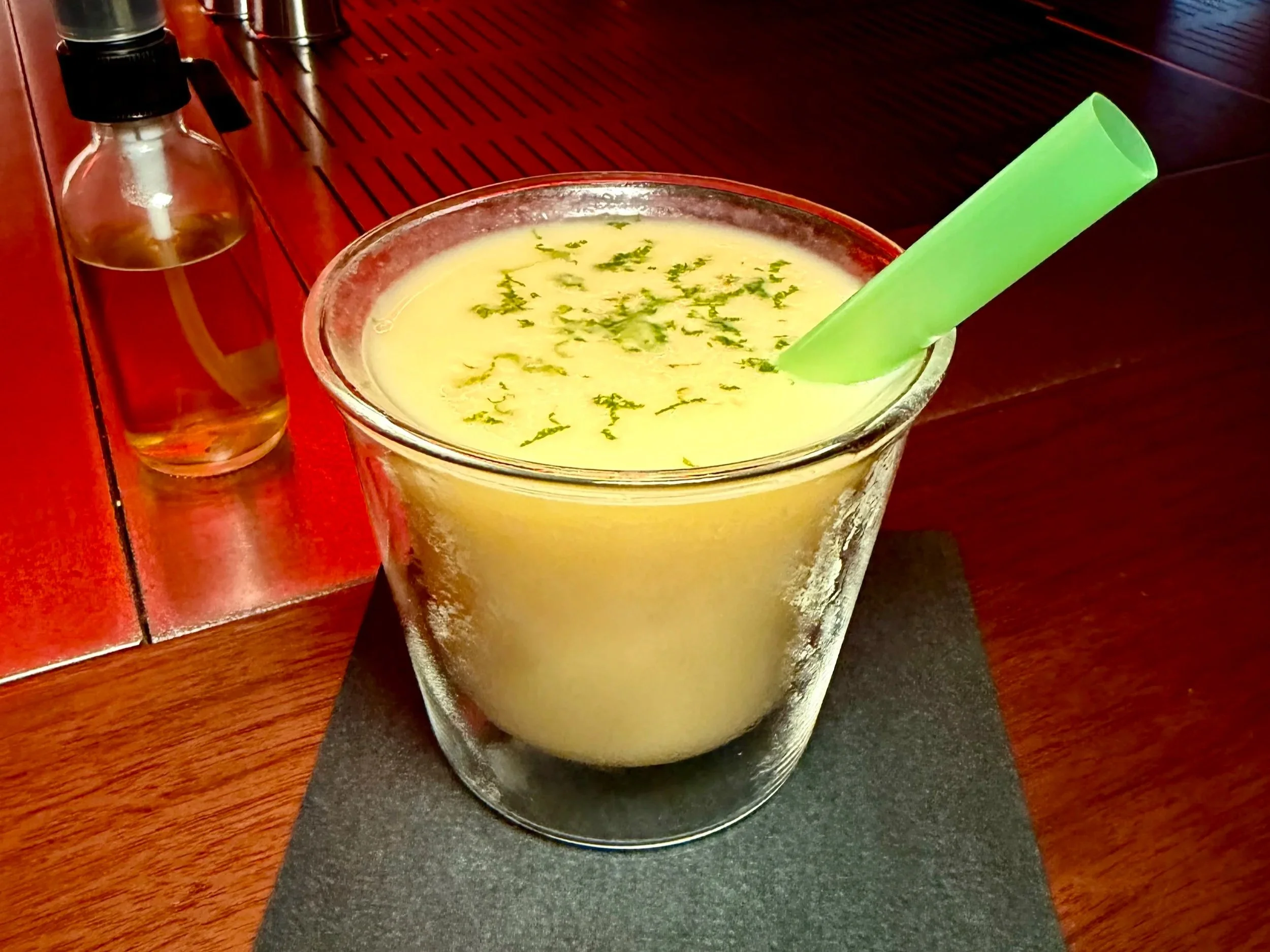
His recommendation begins upstairs with a frozen cocktail, preferably the Mango Piña Colasi,
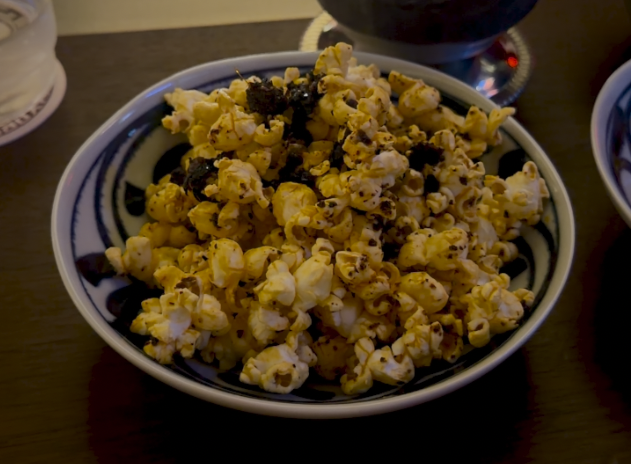
alongside the house-made chili crisp popcorn.
Next come the shengjianbao, because, as he puts it, “If you got any sense in you, you’re here for the dumplings.”
He also recommends the Under the Same Moon, a harvest-inspired highball incorporating layered grain teas, apple, and a winter melon oat-milk foam. Downstairs, the scallion-and-soy noodles are essential.
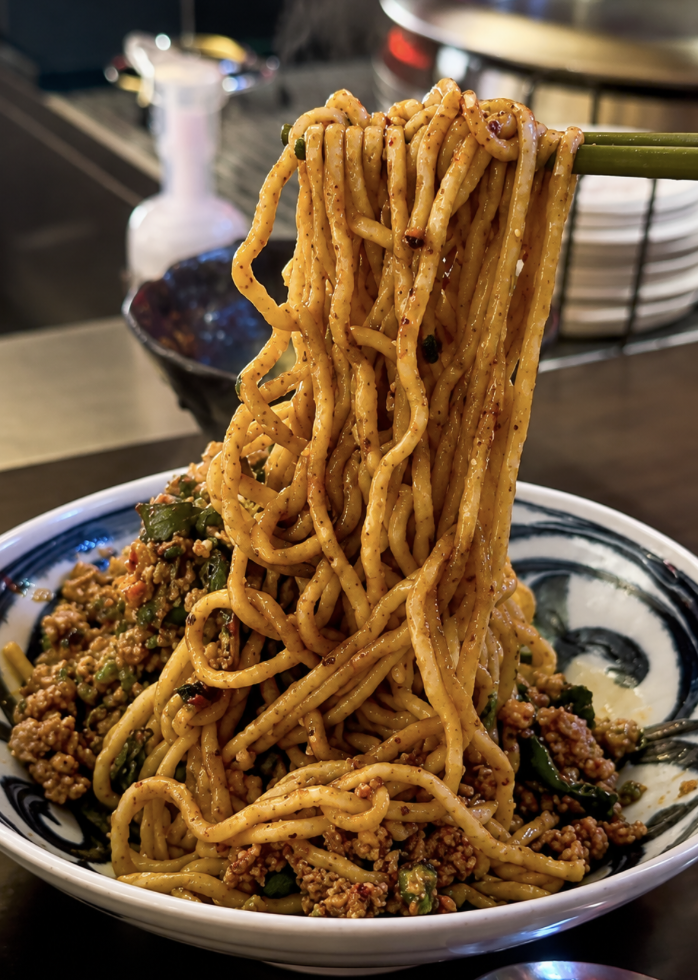
Made using noodles from a longtime Chinatown producer, the dish is deceptively simple, relying on excellent ingredients and precise execution.
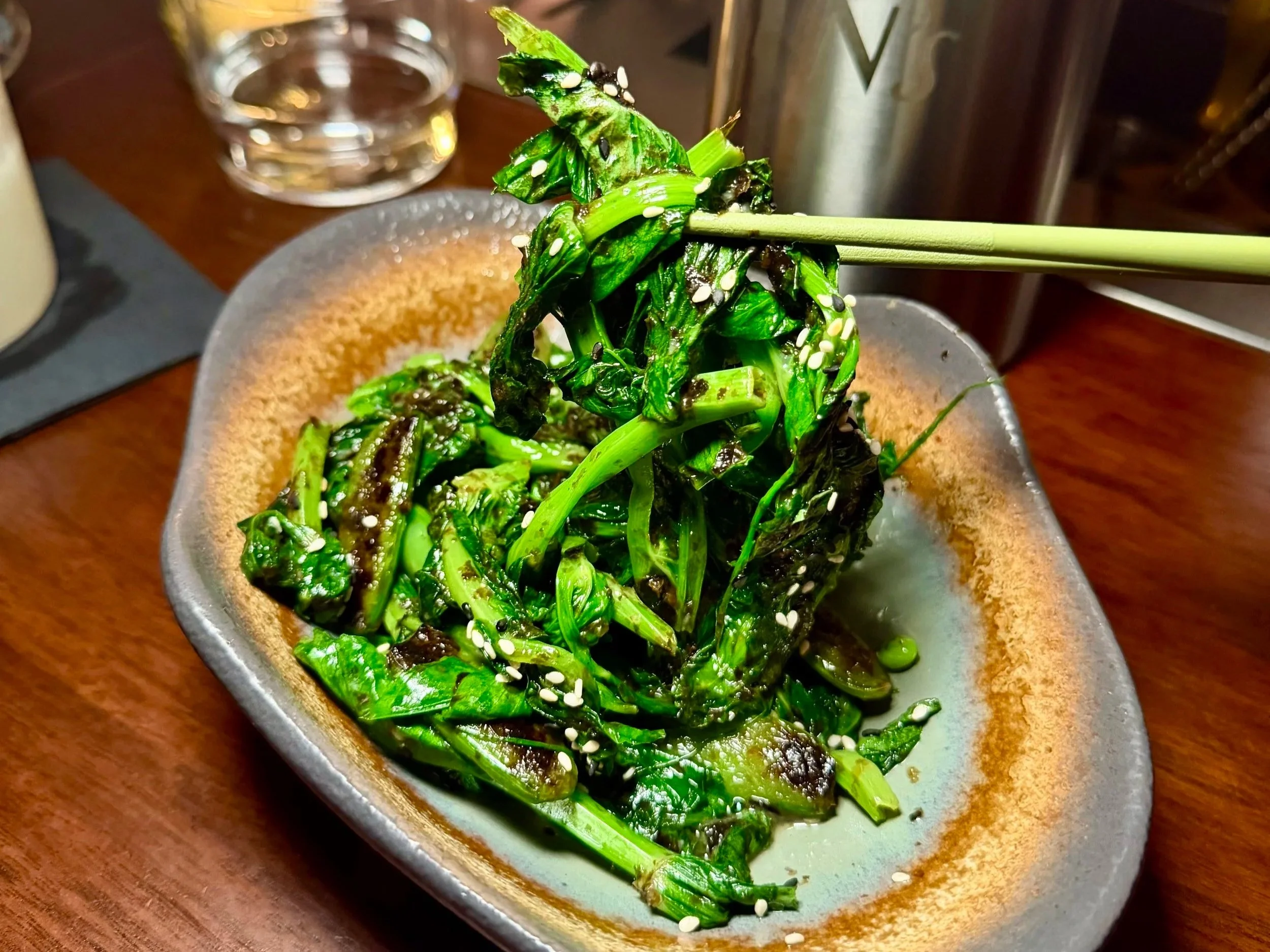
Phillip also enthusiastically recommends the charred peas, dressed with a seaweed compound butter, shallot, and white balsamic vinegar.
Then it’s time for a Daiquiri, an Ozymantheus, and perhaps the Shaoxing Sherry Cobbler or Aloha Highlands. It’s an ambitious order.
But considering everything that went into creating TINS, that feels appropriate.
A Love Letter to Two Cities
Toward the end of our conversation, Phillip reflects on the extraordinary amount of work required to open and operate a bar in New York.
He has spent years working in hospitality. Since opening TINS, his schedule has been relentless. Yet he describes himself as happier and more invigorated than ever.
In the same period, he and Mercury also welcomed their first daughter, Daphne.
Phillip jokes that he has effectively had two babies in the space of a few months: his daughter and his bar. One, he says, has been an angel. The other is proving considerably more demanding. But beneath the humor is something deeply sincere.
TINS is the culmination of decades of ambition, a celebration of his relationship with Mercury, and an ongoing conversation between the city where he grew up and the city that has become part of his family’s identity.
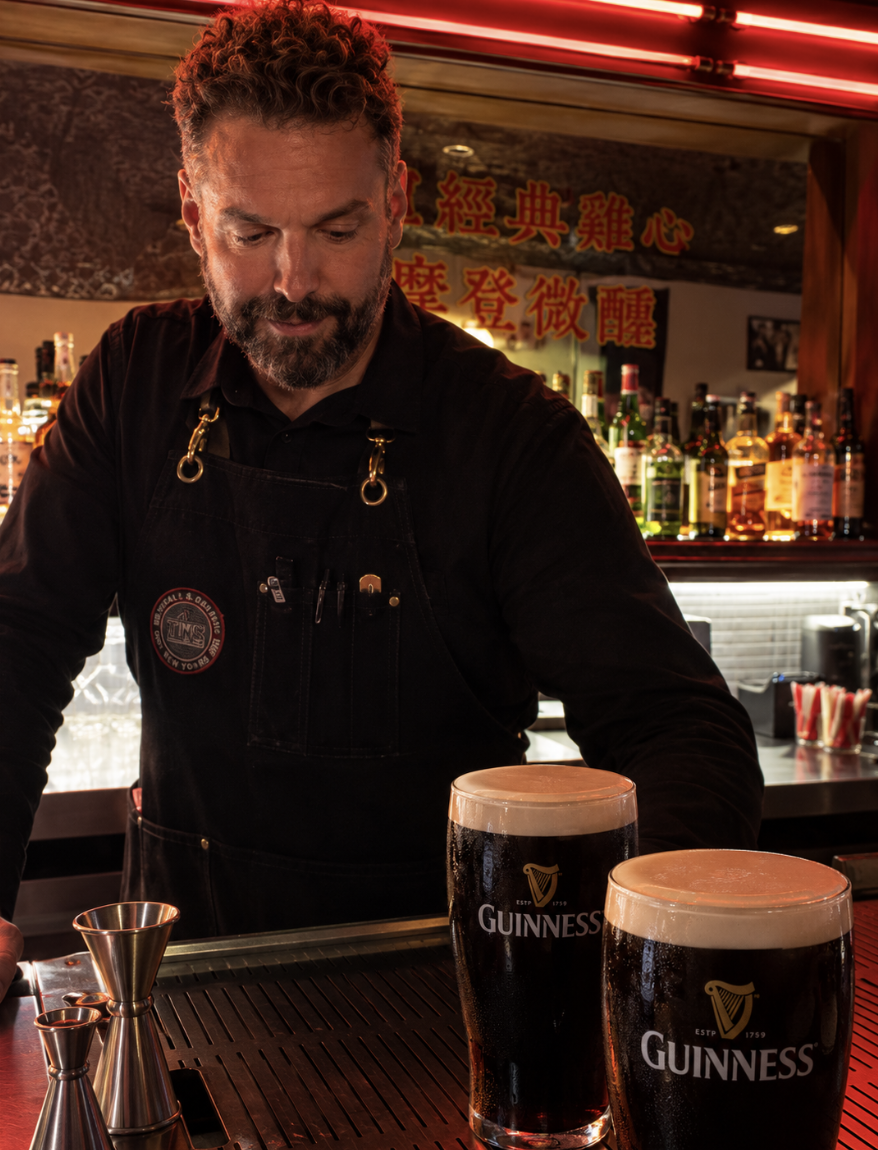
It’s a place where a Shanghai dumpling can sit comfortably beside a Guinness,
where a frozen blue cocktail receives as much thought as a Vesper, and where a simple meal can carry an extraordinary amount of meaning.
In an industry increasingly preoccupied with what’s new, what’s next, and what’s worthy of attention, Phillip has built something rooted in what matters to him.
Love. Memory. Curiosity. Community. And the belief that doing something well is always worth the effort.