Ruby and The Big Giant Red Ball
You might find this silly, but there is one thing about my cousin that still lowkey unsettles me to this day. Okay, maybe “unsettles” is dramatic, but one of her favorite foods genuinely confuses me. And it is not because I hate the food itself. I actually love it. We just enjoy it in completely opposite ways. That food is the tomato.
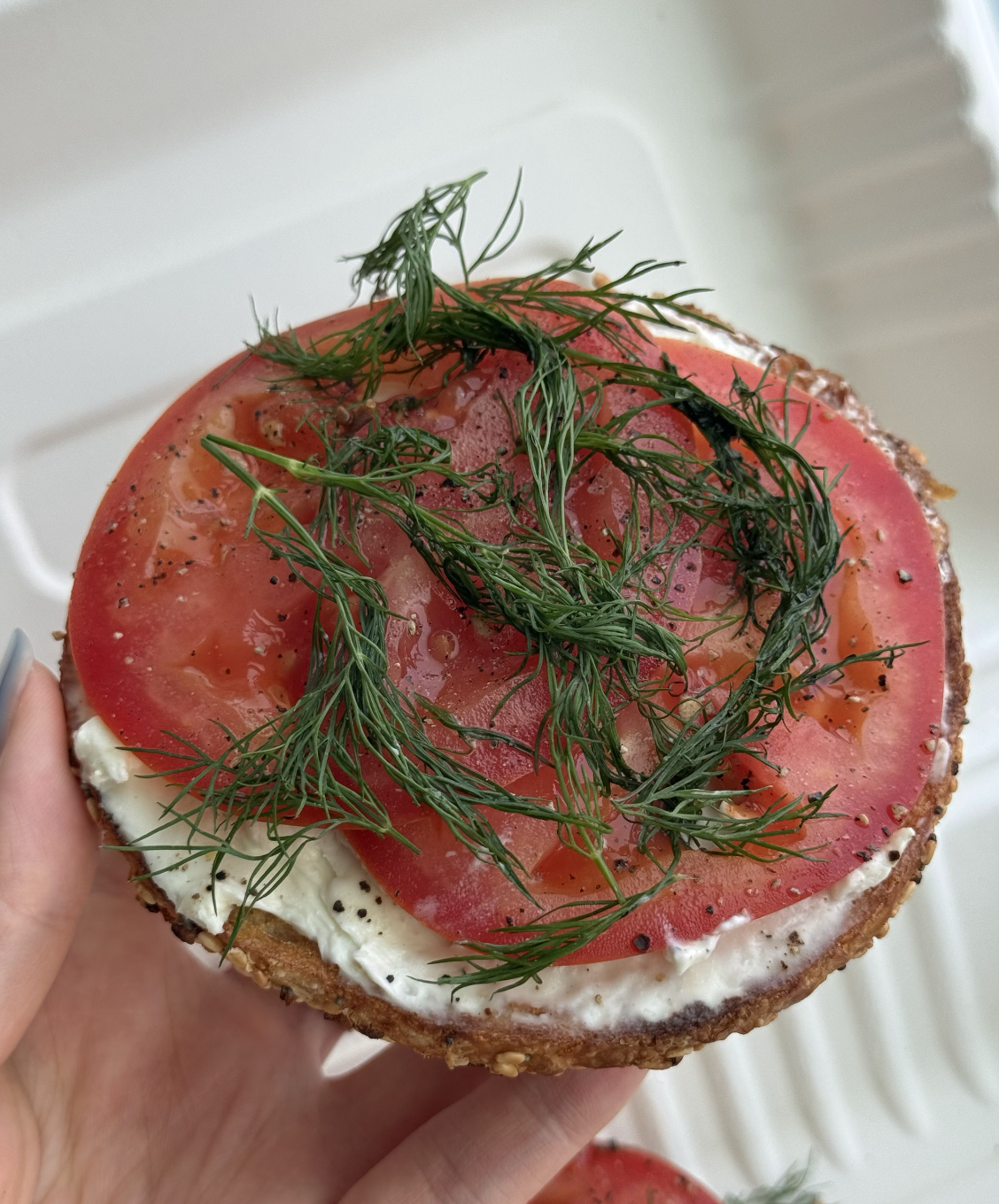
This all begins with one of the most debated food questions of all time: is a tomato a fruit or a vegetable? If you ask my cousin, the answer is obviously fruit. She loves tomato slushies, tomato smoothies, tomato yogurt bowls, even tomato bingsoo. To her, and honestly to a lot of people in South Korea, tomatoes are treated like fruit. I still remember the culture shock of walking into a bakery and seeing glossy baby tomatoes placed on top of a fruit cake like strawberries.
To me, though, tomatoes belong in savory dishes. Burgers. Pasta sauce. Salsa. Tomato soup. Grilled with olive oil and salt. I grew up thinking of tomatoes as vegetables, so seeing someone casually blend one into a smoothie still feels slightly illegal to me.
When you actually research this heavily debated topic, the answer becomes even more confusing. A botanist will tell you a tomato is a fruit. A chef will tell you it is a vegetable. So who is right?
Scientifically speaking, tomatoes are fruits. The definition of a fruit is the ripened ovary of a flowering plant that contains seeds. Since tomatoes grow from the flower of the tomato plant and contain dozens of seeds, they technically fit the definition perfectly. In fact, tomatoes belong to a category of commonly mislabeled botanical fruits alongside cucumbers, peppers, and pumpkins.
But in the culinary world, ingredients are categorized differently. Chefs classify produce based on flavor profile and how it is used in dishes. Fruits are generally sweet or tart and appear in desserts, while vegetables are more savory and used in side dishes or main courses. Since tomatoes are most commonly paired with ingredients like garlic, onion, olive oil, and herbs, they are usually treated as vegetables in Western cooking.
What is interesting, though, is how much culture shapes this definition. In South Korea, people tend to approach tomatoes with far fewer rules. Sugar is often used to enhance the tomato’s natural sweetness, turning it into more of a dessert ingredient. My grandma used to eat sliced tomatoes covered in sugar, which honestly felt bizarre to me growing up, but now kind of makes sense.
So, is a tomato a fruit or a vegetable? The answer really depends on perspective. Botanically, it is a fruit. Culinary wise, it is often treated like a vegetable. Either way, both answers are technically correct. Though if you bring a tomato shortcake to an American dinner party, people might still stare at you a little. Meanwhile, I will continue watching my cousin sip her tomato smoothie in complete disbelief.